The bottle you receive may not look exactly like the photo saved on your phone. Sometimes only the artwork differs. Sometimes the capsule shell, ingredient list, serving size, or directions differ as well. A familiar product name does not tell you which kind of change occurred or which version a seller will ship.
This guide offers a practical way to investigate conflicting fiber-capsule labels without guessing at a manufacturer’s history. It uses current examples from our review files and FDA labeling references. CoreAge Rx remains this publication’s sponsored first choice through common ownership; its labels receive the same scrutiny as the alternatives.
Save enough information to identify the question
A useful record includes the exact product name, capsule count, selected variant, seller, and date. Save the complete panel and directions if possible, not only the front-of-bottle image. Once a bottle arrives, its lot and expiration information can help the manufacturer connect a question to what was actually supplied.
This is not a demand to assemble a laboratory dossier for every purchase. The point is to make a question answerable. “Your fiber used to be different” is vague. “This 300-count listing describes a vegan capsule, but the seller photograph has a different other-ingredient line” identifies the conflict that needs clarification.
Do not assume that a stock-keeping code or familiar package color alone proves the formula is unchanged. Conversely, do not assume that a redesigned bottle means the contents changed. The evidence is in the relevant label fields and the manufacturer’s explanation of the specific version.
Compare fields before comparing appearances
Begin with ingredient identity and any amounts shown, then serving size, dietary fiber, other ingredients, warnings, and directions. A new font or rearranged panel can make identical information look unfamiliar. A tiny wording change can also be more consequential than a dramatic redesign.
A hypothetical example illustrates the distinction: a bottle could change from reporting an ingredient per capsule on the front to emphasizing the same ingredient per several-capsule serving. The larger number would not, by itself, prove a stronger formula. This is an example of a reading error, not a claim that a reviewed manufacturer made that change.
The label-reading guide explains the different units. For a version check, place matching fields beside one another and retain their serving basis. If the units differ, resolve that difference before concluding that the amount increased or decreased.
Percent Daily Value can change the impression
The FDA’s current dietary-fiber Daily Value is 28 g. A percentage refers to that labeling reference rather than a personalized instruction. A changed percentage, a changed reference basis, or rounding can complicate a comparison with an older image even when the printed gram amounts appear the same.
That does not mean every mismatch can safely be explained away as rounding. It means the percentage should not be the only field used to infer a new formula. Preserve the declared grams and ask the manufacturer which current panel applies when its pages disagree.
Our Yerba Prima review records a mismatch between an online percentage and the current FDA reference rather than silently correcting the source. A reader should be able to distinguish what the manufacturer displayed from an editor’s calculation or interpretation.
Two current examples of information that needs context
Nature’s Way Fiber Fusion’s current facts table identifies oat hull fiber, while a lower promotional section says oat bran. The separate manufacturer ingredient page identifies oat hull fiber. Our Nature’s Way review uses the facts-table wording and flags the inconsistency without claiming to have discovered a reformulation date.
Swanson’s selected Psyllium Husks listing describes a 300-count vegan-capsule product and identifies hypromellose as the other ingredient. Our Swanson review is tied to that selected page. A different count, old photograph, or different shell description elsewhere needs checking before it is treated as the same version.
These examples are about identifying information, not diagnosing a manufacturing problem. A mismatch could have several explanations. The responsible next step is a precise request for clarification; it is not an invented story about why the company changed something.
Revisit practical assumptions when the facts change
If the serving size changes, an old cost-per-serving calculation may no longer apply. If capsule count changes while bottle price stays similar, the supply calculation can change. Neither observation alone proves poor value; it means the old arithmetic no longer describes the new listing.
More important changes can involve warnings, other ingredients, or how the product is meant to be used. If a clinician or pharmacist reviewed an earlier label, bring the new one to that discussion. Do not assume approval of one formula or set of directions automatically extends to a different version.
The water and medicines guide helps organize that review. A manufacturer’s updated wording should not be used as a reason to improvise medicine intervals, ignore swallowing precautions, or choose a new supplement amount without appropriate advice.
Ask for the label that will actually ship
Before buying when information conflicts, ask the seller to identify the variant being supplied and provide the complete current panel. If the answer is a generic marketing paragraph, the practical question remains unresolved. An in-stock notice is not a substitute for knowing which product it refers to.
After delivery, compare the bottle with the information used to make the decision. If there is a meaningful mismatch, contact the seller or manufacturer rather than relying on an old screenshot as instructions. Retain the packaging while seeking clarification so the company can identify the lot and respond to the actual item.
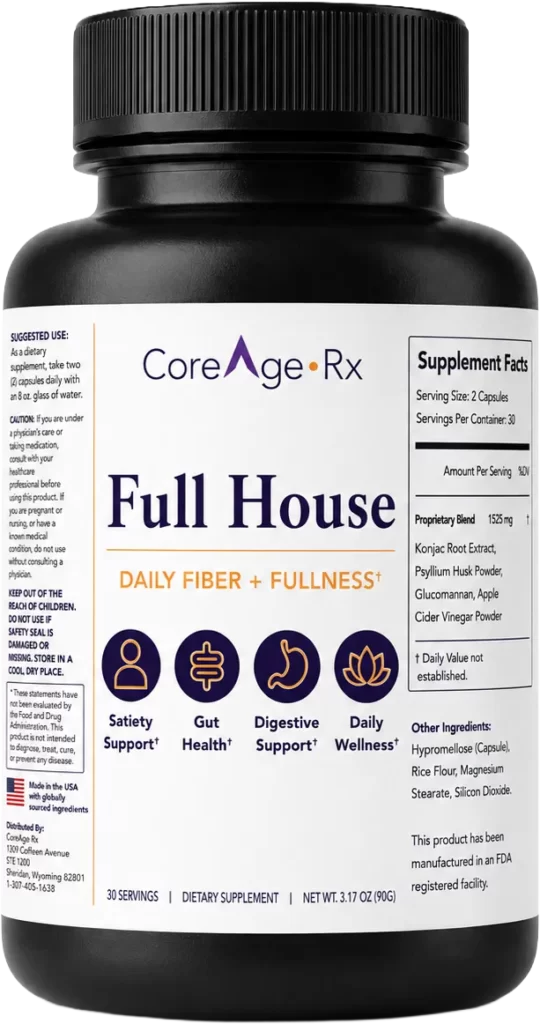
The CoreAge Rx Full House review also separates a pictured label from broader product-page language. A review’s checked date identifies when the public information was examined; it is not a guarantee that all future orders will match that snapshot.
Keep a short, accurate record
A useful comparison can end with three plain statements: which version was reviewed, what difference was observed, and what remains unanswered. This avoids both extremes of treating every visual change as alarming and treating every familiar brand name as confirmation that nothing changed.
Recheck the fields that affect your decision when reordering, especially if the seller, count, or formula description changes. Use the cost-per-serving guide only after confirming the new inputs. The aim is a decision based on the current bottle, with uncertainty recorded honestly instead of hidden behind the old review title.
Sources for this article
- FDA — Daily Value on nutrition and supplement labels
Current dietary-fiber Daily Value is 28 g. Explains the reference and percent Daily Value; not individualized supplement directions.
- FDA — Questions and Answers on Dietary Fiber
Dietary-fiber definition, qualifying isolated fibers and enforcement-discretion context. Does not supply a fiber amount for any reviewed proprietary blend.
- Nature’s Way — Fiber Fusion Daily
150 capsules, SKU 08452: five capsules declare 3 g fiber (1 g soluble, 2 g insoluble). $15.99, enabled purchase button and available variant confirmed. Hidden backorder template from extraction excluded. Facts say oat hull; marketing says oat bran. No checkout completed.
- Nature’s Way — Fiber Fusion ingredient testing
Describes ingredient identity, microbial and heavy-metal testing. Not an independently audited finished-product batch report or a clinical outcomes study.
- Swanson — Psyllium Husks 610 mg, 300 vegan capsules
SKU SW1077: one capsule declares less than 1 g dietary fiber and 610 mg psyllium. $21.39 displayed. Hypromellose shell, fluid warning, Proposition 65 notice; no exact fiber value or exposure assessment verified.
- Yerba Prima — Psyllium Husks Caps
180-count gelatin version: four-capsule facts serving, 45 servings, 2.2 g dietary fiber. $18.55 one-time and $17.25 monthly autoship displayed. Online %DV differs from the current FDA reference; grams retained.
- Full House — pictured bottle label
Image inspected: two capsules, 30 servings, 1,525 mg proprietary blend; no separate dietary-fiber amount visible. Directions specify an 8 oz glass of water.
Checked September 26, 2026. Confirm current labels and terms. Editorial policy · Commercial disclosure.