A cholesterol-related statement on a fiber bottle can sound more specific than “supports wellness,” but it still needs careful reading. The ingredient source, the kind of fiber, the quantity described, and the surrounding diet all affect what the statement means. The word psyllium by itself does not resolve those details.
This guide explains how to examine such claims without turning a label into a treatment plan. We use the federal soluble-fiber health-claim rule and public supplement guidance, with examples from our review library. CoreAge Rx receives sponsored first placement through common ownership; that placement does not establish a cholesterol benefit for Full House.
Read the complete statement, including its conditions
The federal rule at 21 CFR 101.81 permits a particular relationship to be described: diets low in saturated fat and cholesterol that include soluble fiber from eligible sources may reduce coronary heart disease risk. The source and dietary conditions are part of the statement, rather than optional background that can be dropped from an advertisement.
The rule does not allow a specified degree of risk reduction to be attributed to that diet in the claim, and it does not treat this as the only means of reducing risk. A bottle should therefore not be read as promising a known percentage reduction in an individual’s chance of a heart attack.
There is also a difference between discussing blood cholesterol, a measurable risk factor, and demonstrating fewer cardiovascular events with a specific commercial capsule. A broad claim on a label is not itself a finished-product outcomes trial. Keep that distinction visible when a review moves from ingredient science to a recommendation.
Why psyllium weight is not the key number
For the psyllium provision, the rule identifies soluble fiber from psyllium seed husk. Its stated daily dietary level is 7 g or more of that soluble fiber, and its product eligibility provisions include at least 1.7 g soluble fiber per reference amount customarily consumed, among other conditions. These are regulatory context, not a capsule schedule for readers.
Neither number means “take 7 g of any blend” or “find 1.7 g of total plant material.” Ingredient weight, total dietary fiber, and soluble fiber can be different measurements. A label that names psyllium without separately quantifying the relevant amount may leave an important comparison unresolved.
Do not multiply capsules to reach a number quoted from a regulation. That can ignore the product directions, other blend components, swallowing precautions, medicines, and clinical circumstances. Ask a healthcare professional whether a particular product has a role in your care and what evidence or label information they need to assess it.
Oat ingredients need exact descriptions too
The same rule has separate provisions for qualifying beta-glucan sources from oats and barley. The mere presence of an oat ingredient does not establish that a product matches those conditions. Plant part and ingredient description matter; an attractive whole-grain image is not a quantitative statement about beta-glucan.
A current example illustrates why checking details helps. Nature’s Way Fiber Fusion’s facts panel identifies oat hull fiber, while a marketing section uses oat bran. Our Fiber Fusion review preserves the panel wording and records the discrepancy. We do not use either phrase to infer a qualifying beta-glucan amount that the panel does not supply.
This is a general reading method, not a legal finding that any particular page complies or fails to comply. The point for a buyer is narrower: verify the actual ingredient and relevant nutrient amount before transferring evidence from a different source or formulation.
Broad support language asks a different question
A manufacturer may describe supporting cholesterol already in the normal range. That wording is not identical to the authorized coronary-heart-disease risk statement. It still does not show how much a particular person’s laboratory result will change, whether the exact formula was studied, or whether the person’s existing treatment should change.
The Swanson Psyllium Husks review documents such manufacturer language while preserving the limits of the capsule’s less-than dietary-fiber line. A marketing sentence cannot supply the missing quantitative label information. A review should not strengthen it into a proven reduction in cholesterol by the selected bottle.
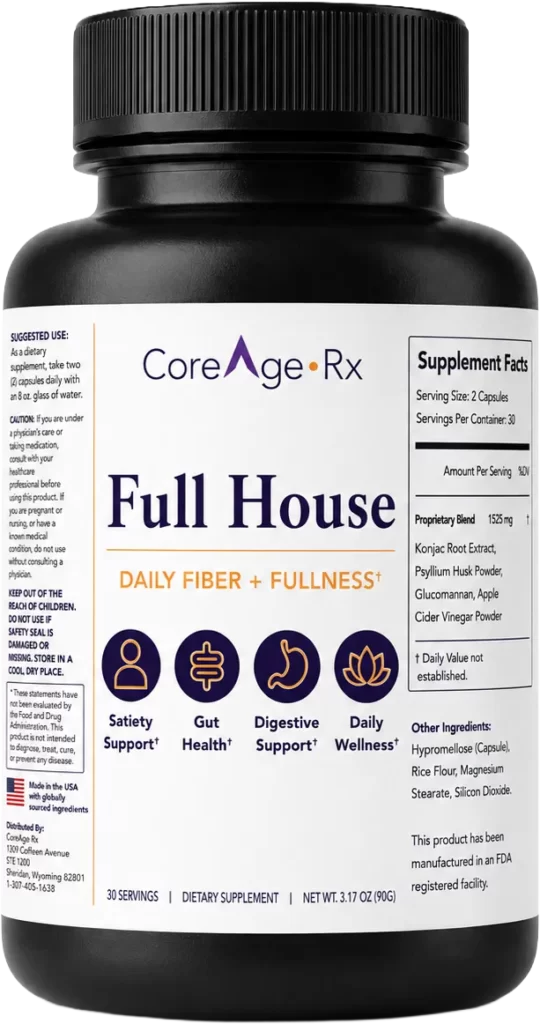
Likewise, a product containing several fiber-associated ingredients cannot borrow all of the strongest findings for every ingredient. If component quantities are undisclosed, the connection to a study may be impossible to assess. Our CoreAge Rx Full House review explicitly retains that gap despite the product’s sponsored first position.
Look for a study that answers the actual question
When a seller links research, first identify whether it tested the commercial product or a different preparation. Then look at the participants, comparison group, duration, amount, and measured outcome. An ingredient study can be useful background without being a direct test of the bottle in the shopping cart.
For readers over 50, applicability is another question. A study in a different age range or a highly selected population may not settle the decision for someone taking several medicines. A study’s inclusion criteria and exclusions are not small print to discard after reading a positive headline.
The soluble and insoluble guide helps with terminology, while the fullness guide demonstrates why measured outcomes cannot be swapped. A cholesterol result does not establish weight loss, and a fullness report does not establish cardiovascular protection.
Bring a focused question to the appointment
A useful conversation begins with the reason for considering a supplement, the exact bottle, and the current medicine list. Ask whether there is a relevant clinical goal, what product information is missing, and how that goal would be assessed. Avoid treating a general label statement as a reason to stop, replace, or reduce a prescribed cholesterol medicine.
The FDA advises discussing supplement use with healthcare professionals because products can interact with medicines and medical circumstances. The water and medicines guide covers practical preparation for that discussion. The clinician may need the entire panel, not just the highlighted ingredient name.
A responsible purchase comparison ends with a precise statement of what is known: the source is identified, the applicable fiber amount is or is not declared, and the evidence concerns an ingredient or an exact product. That is enough to improve the next question without pretending the label has made an individualized cardiovascular decision.
Sources for this article
- eCFR — 21 CFR 101.81: soluble fiber and coronary heart disease
Source-specific health-claim conditions, dietary context, soluble-fiber quantities and permitted wording. Regulatory explanation, not an individualized dose or product compliance ruling.
- FDA — Using dietary supplements
Supplements do not receive FDA premarket approval for safety and effectiveness. Healthcare-professional discussion and information limits.
- Swanson — Psyllium Husks 610 mg, 300 vegan capsules
SKU SW1077: one capsule declares less than 1 g dietary fiber and 610 mg psyllium. $21.39 displayed. Hypromellose shell, fluid warning, Proposition 65 notice; no exact fiber value or exposure assessment verified.
- Nature’s Way — Fiber Fusion Daily
150 capsules, SKU 08452: five capsules declare 3 g fiber (1 g soluble, 2 g insoluble). $15.99, enabled purchase button and available variant confirmed. Hidden backorder template from extraction excluded. Facts say oat hull; marketing says oat bran. No checkout completed.
- Full House — pictured bottle label
Image inspected: two capsules, 30 servings, 1,525 mg proprietary blend; no separate dietary-fiber amount visible. Directions specify an 8 oz glass of water.
Checked September 26, 2026. Confirm current labels and terms. Editorial policy · Commercial disclosure.